
Ford Super Duty trucks with the 6.7L Powerstroke diesel engine use a Selective Catalytic Reduction system to meet federal emissions requirements. The SCR system injects Diesel Exhaust Fluid into the exhaust stream where it reacts with nitrogen oxides and converts them into harmless nitrogen and water. When everything works correctly, the system operates invisibly. When it does not, you get warning lights, speed restrictions, and repair bills that can easily reach thousands of dollars.
The Powerstroke DEF system has become one of the most common complaint areas for F-250, F-350, and F-450 owners. Understanding why these problems happen and how to prevent them saves time, money, and the frustration of being stranded with a truck locked in limp mode.
What Is Ford DEF? Capacity, Refills & Cost
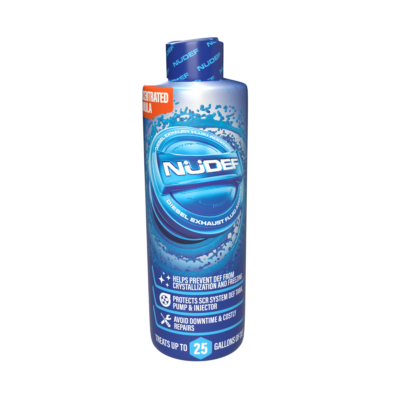
Ford DEF is simply the diesel exhaust fluid your 6.7L Power Stroke uses to meet emissions — Ford doesn’t make a special formula. It’s the same ISO 22241 standardized fluid (32.5% high-purity urea, 67.5% deionized water) sold everywhere, and any API-certified DEF works in an F-250, F-350, or F-450. A quality DEF stabilizer additive keeps that fluid from degrading in the tank and helps prevent the crystallization behind most of the failures below.
How much DEF does a Ford Power Stroke hold? Super Duty trucks carry roughly a 5-gallon DEF tank, filled through the blue-capped port near the diesel fill. Depending on model year and how you drive, a full tank lasts about 5,000–10,000 miles, and the dash starts warning you around 1,000 miles of DEF remaining — don’t ignore it, because an empty DEF tank triggers a no-restart derate.
What does Ford DEF cost? About – per gallon in jugs or at the pump, so a refill runs roughly –. The fluid itself is cheap — the expensive Ford DEF problems come from crystallization, heater faults, and injector issues, which is exactly what the rest of this guide covers.
How the Powerstroke DEF System Works
The 6.7L Powerstroke uses a closed-loop SCR system with several components that must work together precisely. A DEF tank stores the fluid, typically located near the fuel tank. A DEF pump pressurizes the fluid and delivers it to a dosing injector mounted in the exhaust system upstream of the SCR catalyst. Temperature and NOx sensors continuously monitor exhaust conditions and feed data back to the powertrain control module, which adjusts DEF injection rates in real time.
The system is designed to be self-regulating, but it has no tolerance for poor DEF quality. Unlike engine oil or coolant, which can function acceptably across a range of conditions, DEF must maintain precise chemical properties to work in the SCR catalyst. Any deviation in concentration, purity, or physical condition can cascade into sensor faults, injection problems, and eventually engine derate.
Most Common Powerstroke DEF Problems
DEF crystallization is the single most reported issue on Powerstroke trucks. When DEF loses water through evaporation from heat exposure, a loose cap, or extended storage, urea concentration rises above the 32.5% specification. The excess urea forms white crystalline deposits that accumulate in the DEF injector nozzle, supply lines, and around the tank outlet. Once crystals form in the injector, the system cannot dose correctly and begins throwing fault codes.
Contamination is the second most common cause of DEF system failures. Diesel fuel, coolant, windshield washer fluid, and even tap water will damage the SCR catalyst if introduced into the DEF tank. The NOx quality sensor detects these contaminants and triggers codes that cannot be cleared until the tank is drained, flushed, and refilled with clean DEF. In severe cases, the SCR catalyst itself must be replaced.
DEF degradation from age and heat rounds out the top three. DEF stored above 86 degrees Fahrenheit begins breaking down faster than its rated shelf life. Truck beds in direct sunlight during summer months regularly exceed this temperature. The DEF in the tank and in jugs stored in the bed can degrade to the point where the quality sensor rejects it, even though it still looks and smells normal.
Powerstroke DEF Diagnostic Codes
Ford programmed the Powerstroke PCM to monitor DEF system health continuously. When a problem is detected, the system follows a progressive response: first a warning message on the instrument cluster, then a countdown of engine starts before speed restrictions begin. The most commonly triggered codes on the 6.7L Powerstroke are listed in the comparison table above, but the two owners encounter most frequently are P20EE and P207F.
P20EE indicates that the SCR catalyst is not converting NOx efficiently enough. This usually means the DEF being injected has degraded or the injector is partially blocked with crystals. P207F signals that the DEF quality sensor has detected fluid outside its acceptable parameters. Both codes initiate a derate countdown that ultimately limits the truck to 5 mph if not resolved.
What Causes Powerstroke DEF Failures
Most Powerstroke DEF problems trace back to one of three root causes. The first is time. Trucks that sit for extended periods between use, including weekender tow vehicles, seasonal work trucks, and spare fleet units, allow DEF to stagnate in the tank and lines. Water slowly evaporates through the cap seal and vent system, concentrating the urea and creating conditions for crystal formation.
The second root cause is temperature. DEF freezes at 12 degrees Fahrenheit and degrades faster above 86 degrees. The Powerstroke has a DEF heater to address freezing, but repeated freeze-thaw cycles stress the fluid and can cause concentration inconsistencies throughout the tank. Summer heat degrades DEF in ways that are invisible until the quality sensor flags it.
The third is handling. Using non-certified DEF, storing it in containers that previously held other chemicals, or dispensing it with equipment that has been exposed to petroleum products can introduce contaminants at levels the human eye cannot detect but the SCR sensors absolutely will.
How to Prevent DEF Problems
Prevention comes down to three practices. Keep the DEF fresh by using it within its shelf life and storing it in appropriate conditions. Treat the DEF with a stabilizer before periods of inactivity or seasonal temperature swings. And protect the system from contamination by using dedicated equipment and certified fluid.
A DEF stabilizer works by slowing the chemical degradation process and reducing the conditions that lead to crystallization. For Powerstroke owners who tow seasonally, use their truck as a second vehicle, or operate in regions with extreme temperature variation, treating the DEF tank is the single most cost-effective preventive measure available. The cost of a stabilizer treatment is negligible compared to a single DEF injector replacement, let alone a catalyst failure.
When to See a Dealer vs DIY
Some DEF problems can be resolved at home. If the quality sensor has flagged degraded fluid and you have not yet reached the derate stage, draining the tank, flushing the system, and refilling with fresh treated DEF may clear the codes after a few drive cycles. The DEF tank drain is accessible on most Super Duty trucks without lifting the vehicle.
Dealer intervention is necessary when crystal deposits have physically blocked the DEF injector, when contamination has reached the SCR catalyst, or when the system has entered full derate and will not accept a reset. At that point, the injector typically needs to be removed and cleaned or replaced, and the catalyst may need inspection. These are not weekend garage jobs. They require diagnostic software and specialized knowledge of the Ford emissions system.
The best outcome is never reaching that point. Addressing DEF quality proactively, before the first warning light, keeps the system operating as designed and keeps the truck out of the dealership service bay.
Chasing a specific code on your Power Stroke? See the dedicated guides for P20E8 (reductant pressure too low) and P203F (reductant level too low), or the full DEF trouble codes index.